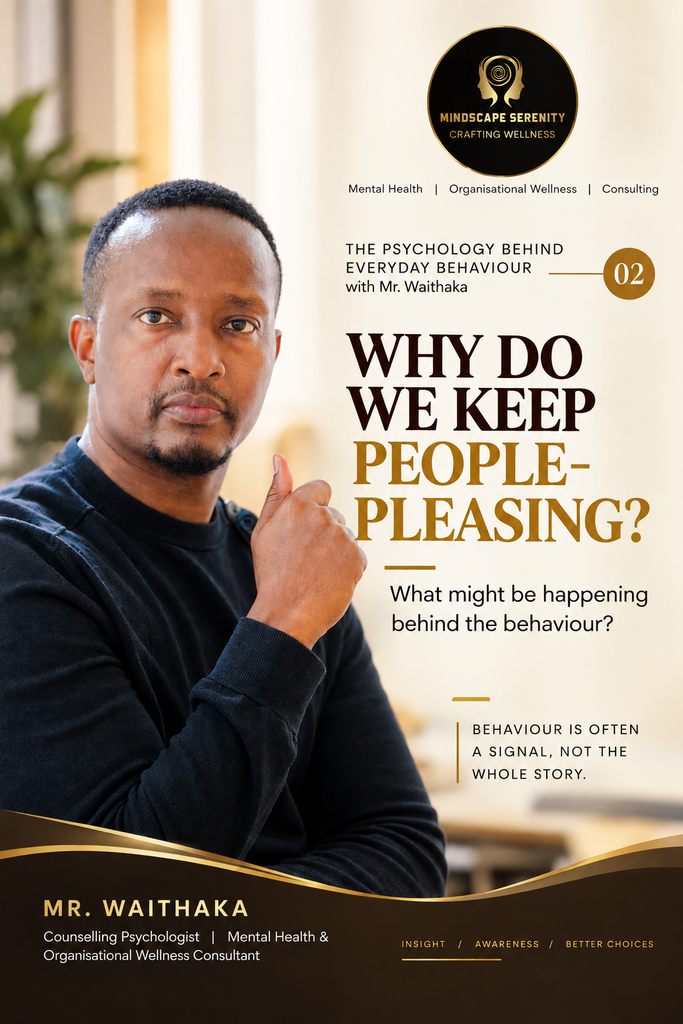
People-pleasing is often mistaken for kindness.
But sometimes, behind the constant need to please others is a much deeper psychological pattern.
For some people, it begins early.
A child performs well in school and receives praise. Good grades bring approval. Being obedient brings acceptance. Making parents proud becomes a source of validation.
There is nothing wrong with encouraging a child to work hard. The question is what the child eventually learns about their own worth.
If I perform well, I am praised.
If I disappoint, I am criticised.
If I make people happy, I feel accepted.
Over time, the child may begin to associate achievement and compliance with belonging. What started as a desire to please parents can gradually become a way of navigating relationships.
Then we grow up.
The classroom becomes the workplace.
The teacher becomes the supervisor.
The need for parental approval can sometimes become the need for approval from colleagues, managers, partners or friends.
We become the person who struggles to say no.
We take on more work even when we are exhausted.
We agree when we actually disagree.
We apologise even when we have done nothing wrong.
We avoid difficult conversations because we are uncomfortable with someone being disappointed in us.
From a psychological perspective, this can involve approval-seeking, conflict avoidance, low assertiveness and deeply held beliefs about worth and acceptance.
The interesting part is that people-pleasing can look very positive from the outside.
You may be described as dependable.
Helpful.
Kind.
A team player.
The person everyone can count on.
But internally, you may be exhausted, resentful or quietly losing touch with what you actually want.
This is where we need to distinguish between healthy consideration and self-abandonment.
Helping someone because you genuinely choose to is different from helping because you are afraid of what will happen if you say no.
Compromise is different from constantly suppressing your own needs.
Kindness is different from believing that you must keep everyone happy to remain valued.
And this pattern does not necessarily stop when we leave the workplace.
It can follow us into our homes and relationships.
We may keep saying yes to family members, friends and partners while silently accumulating frustration.
Eventually, the person who has spent years saying “It’s okay” may find themselves wondering why they feel so angry, exhausted or unappreciated.
Sometimes the problem is not that we care too much about other people.
It is that we have never learned that our needs matter too.
Breaking the pattern does not mean becoming selfish.
It means developing healthy boundaries.
It means learning to tolerate the discomfort of someone else’s disappointment.
It means understanding that saying no does not make us bad people.
And perhaps most importantly, it means separating our worth from our usefulness to others.
You can disappoint someone and still be a good person.
You can say no and still care.
You can set a boundary and still love someone.
Sometimes psychological growth is simply learning that you do not have to earn your worth by constantly pleasing everyone around you.
Mr. Waithaka | Counselling Psychologist | Mental Health & Organisational Wellness Consultant
The Psychology Behind Everyday Behaviour — Episode 02



0 Comments